
Everyone who moves to Los Angeles asks a version of the same question the first night they leave their car on the street: is this actually safe?
The honest answer is that street parking in LA is usually fine, and the risk that does exist is almost entirely property risk — a window, a converter, a backpack you forgot on the seat. Where you park, and what you leave in the car, moves those odds far more than most people realize.
Here's what actually happens to parked cars in LA, and what's worth doing about it.
What actually happens to cars parked on LA streets
Break-ins are the volume crime. Theft from a vehicle — the smash-and-grab — is consistently the most common crime reported in Los Angeles. The city's annual count topped 30,000 incidents in three of the six years between 2019 and 2024, and it has been trending down since 2024. That number is big, but the context matters: it's spread across a city of millions of cars, and the overwhelming majority of those incidents are a broken window and a stolen bag, not a stolen car.
Catalytic converter theft has fallen hard from its peak. Converter thefts exploded in 2021–2022 and have dropped sharply since. LAPD has reported roughly a 45% year-over-year decline in citywide converter thefts, and national totals have come down from their peak as well — driven by scrap-metal price drops, marking programs, and state laws that made it harder to sell an unmarked converter. It's a smaller problem than it was three years ago. It is not zero, and it's still concentrated on specific vehicles.
Whole-vehicle theft skews toward specific makes. Kia, Hyundai, and Chevrolet models have been disproportionately targeted in recent years, and thieves have gotten more technical — key-fob relay attacks and signal jammers now show up alongside the old methods.
The practical read: plan for a window and a backpack, take the extra step if you drive a commonly targeted car, and don't lose sleep over it.
Which cars get targeted, and why
- Catalytic converters: hybrids (the Prius is the classic target — its converter is unusually valuable), plus trucks, vans, and SUVs where the underside is high enough to slide under without a jack. A converter cut takes a couple of minutes with a battery saw.
- Smash-and-grabs: any car with something visible. A laptop bag, a backpack, a shopping bag, even a jacket that might be covering something. Thieves work fast and opportunistically — they're not casing your specific car, they're walking a block scanning windows.
- Full theft: commonly targeted makes and models, older vehicles without immobilizers, and any car with a fob left inside.
- Parts: wheels and tires (especially on trucks and luxury sedans), tailgates, and badges.
Where you park matters more than what you drive
A few habits that meaningfully change your odds:
Park where there are eyes. Foot traffic, lit storefronts, a residential block where people actually walk their dogs at 10 pm. Thieves want privacy.
Pick the lit spot, even if it's half a block farther. A working streetlight is the cheapest security device in the city. If the light above your usual spot has been out for weeks, that's a reason to move — and a reason to report it.
Avoid the escape hatch. Spots right next to a freeway on-ramp, an alley mouth, or a dead-end cut-through give someone a fast, unobserved exit. The middle of a long residential block is a harder place to work.
Don't be the isolated car. The lone car on an empty industrial block overnight is a better target than the same car parked in a row of twenty.
Nose-in on a hill, wheels curbed. Not a theft thing — but it's the law in LA on any grade, and a rolled car is a much more expensive problem than a stolen backpack.
The empty-car rule
The single most effective thing you can do costs nothing: make the car boring to look into.
- Nothing visible. Ever. Not a bag, not a jacket, not a phone mount with a charging cable dangling — a visible cable says "there's probably a device in here."
- Don't move things to the trunk in the parking spot. If someone's watching the block, you just showed them where the laptop went. Stow it before you arrive.
- Keep the fob out of the car, and consider a Faraday pouch at home if your car has keyless entry — relay attacks work by amplifying a fob sitting on your kitchen counter near the front door.
- Don't keep the garage remote clipped to the visor alongside registration showing your home address. That pairing turns a car break-in into a house problem.
- Photograph your VIN, plate, and registration and keep them in your phone. If the car does get taken, you'll be asked for all three immediately.
Hardware that's actually worth the money
Ranked roughly by value per dollar:
- A dashcam with parking mode. Records on impact or motion while you're away. It won't stop anything, but footage is what turns "someone hit my car" into a claim that goes somewhere.
- A catalytic converter shield or cage — if you drive a hybrid, truck, or high-clearance SUV. A few hundred dollars installed, and it turns a two-minute job into one most thieves skip. Converter etching or marking programs (often run free by local police departments and community groups) help too, by making the part harder to resell.
- A visible steering wheel lock, especially on commonly targeted makes. It's a deterrent precisely because it's visible from the sidewalk.
- A tilt- or vibration-sensitive alarm, which triggers on a jack or a saw rather than only on a door.
- Wheel locks, if you have wheels worth stealing.
What isn't worth much: alarm stickers with no alarm, and the "leave the glovebox open so they don't break the window" folk remedy — an open, empty glovebox mostly tells passersby the car's already been hit.
The risk nobody mentions: a car that never moves
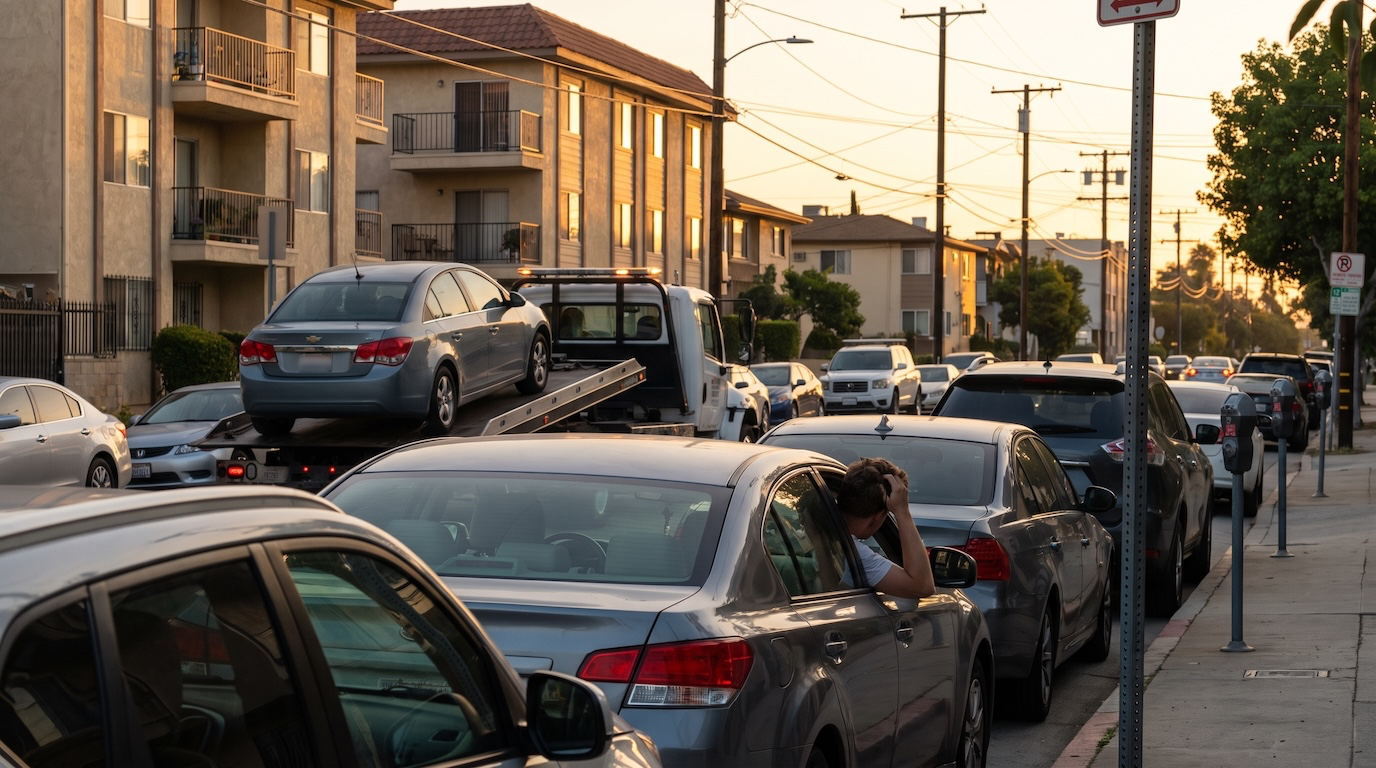
There's a quieter cost to leaving a car parked on the same LA block indefinitely. Los Angeles enforces a 72-hour rule — a vehicle can't sit parked on a public street for more than 72 consecutive hours. Past that, it's citable and towable, and complaints from neighbors are exactly how it gets noticed.
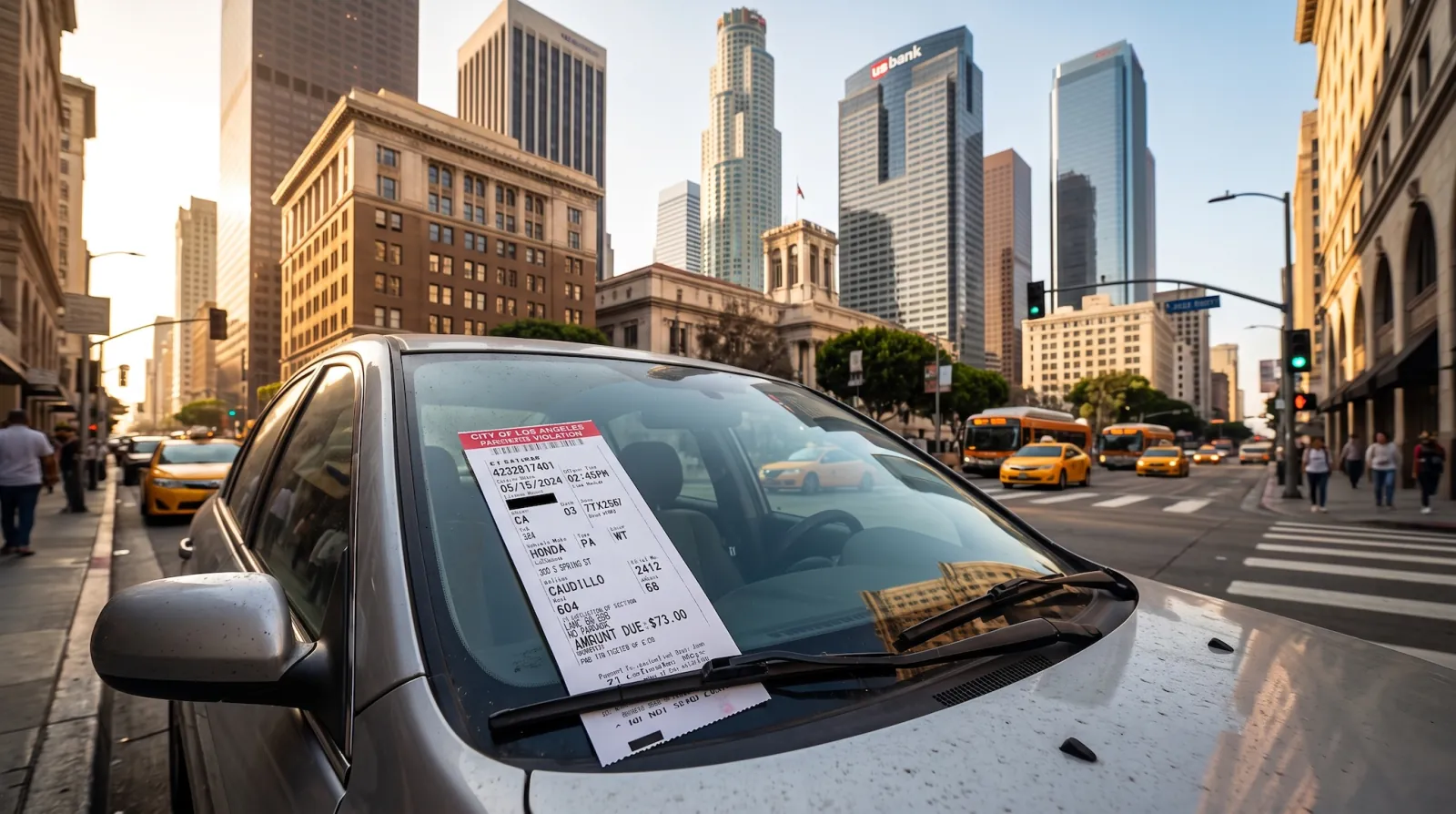
A car that hasn't moved in a week also looks unattended, which is its own invitation. And if it sits through a posted street-sweeping window, you're paying about $73 for the privilege — see our breakdown of what parking tickets actually cost in LA and why cars get towed.
If you travel, or your car is a weekend car, moving it regularly isn't just about tickets. A car in circulation is a car that reads as owned and watched.
If it happens anyway
- Don't touch anything more than you have to, and don't confront anyone. It's property; it's insured or it isn't, and either way it isn't worth a person.
- Photograph everything before you clean up glass — the damage, the interior, the street, the block.
- File a police report. LAPD takes many non-emergency vehicle-burglary reports online. You need the report number for any insurance claim, and for replacing documents.
- Call your insurer. Break-ins and theft fall under comprehensive coverage, not collision — and if you carry liability only, none of it is covered. Compare your deductible against the loss before filing; a $1,000 deductible on a $600 window is a claim not worth making.
- Glass claims are often separate. Many California policies handle auto glass with a lower (sometimes zero) deductible. Ask specifically.
- Replace what identifies you, not just what's expensive — if your registration, garage remote, or mail was in the car, deal with those first.
Where Curbswap fits
Curbswap exists for the ticket problem, not the crime problem — a vetted driver moves your parked car to a legal spot before street sweeping so you never get the citation. But two side effects are relevant here: your car moves regularly instead of sitting for days, and every move is documented with timestamped photos from four angles plus a GPS pin. If something happens to your car between moves, you have a dated visual record of its condition and exactly where it was — which is more than most people can produce for an insurance claim.
You can also just use the free half: look up any LA block's street-sweeping rules and set a reminder without a subscription.