Check street sweeping for any LA address.
Enter an address or ZIP to see the posted street-sweeping schedule for that block — then let Curbswap move your car before it hits, automatically.


LA street sweeping, in plain English.
Every block has a posted window
Usually a one- to two-hour "No Parking" slot on a set day, sometimes only on certain weeks (1st & 3rd, or 2nd & 4th) — and often different on each side of the street.
The ticket does not wait for the sweeper
Enforcement is tied to the posted window, not whether the truck actually shows up. Parked there during the window means you can be cited regardless.
Temporary signs are not in any database
Film shoots, construction, and utility work can post a no-parking sign with as little as 24–72 hours notice. Always double-check the actual signs on your block.
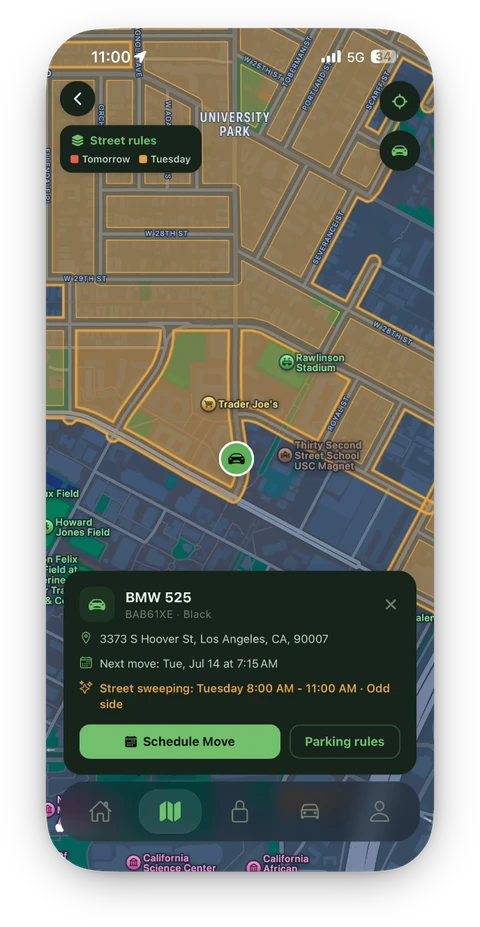
Take these rules with you.
Search any address free, right in the app — no account needed. Or create a free account to save your car's spot, see its rules on a live map, and get alerts to move it before a ticket.
Beat the sweeper — everything you need to know.
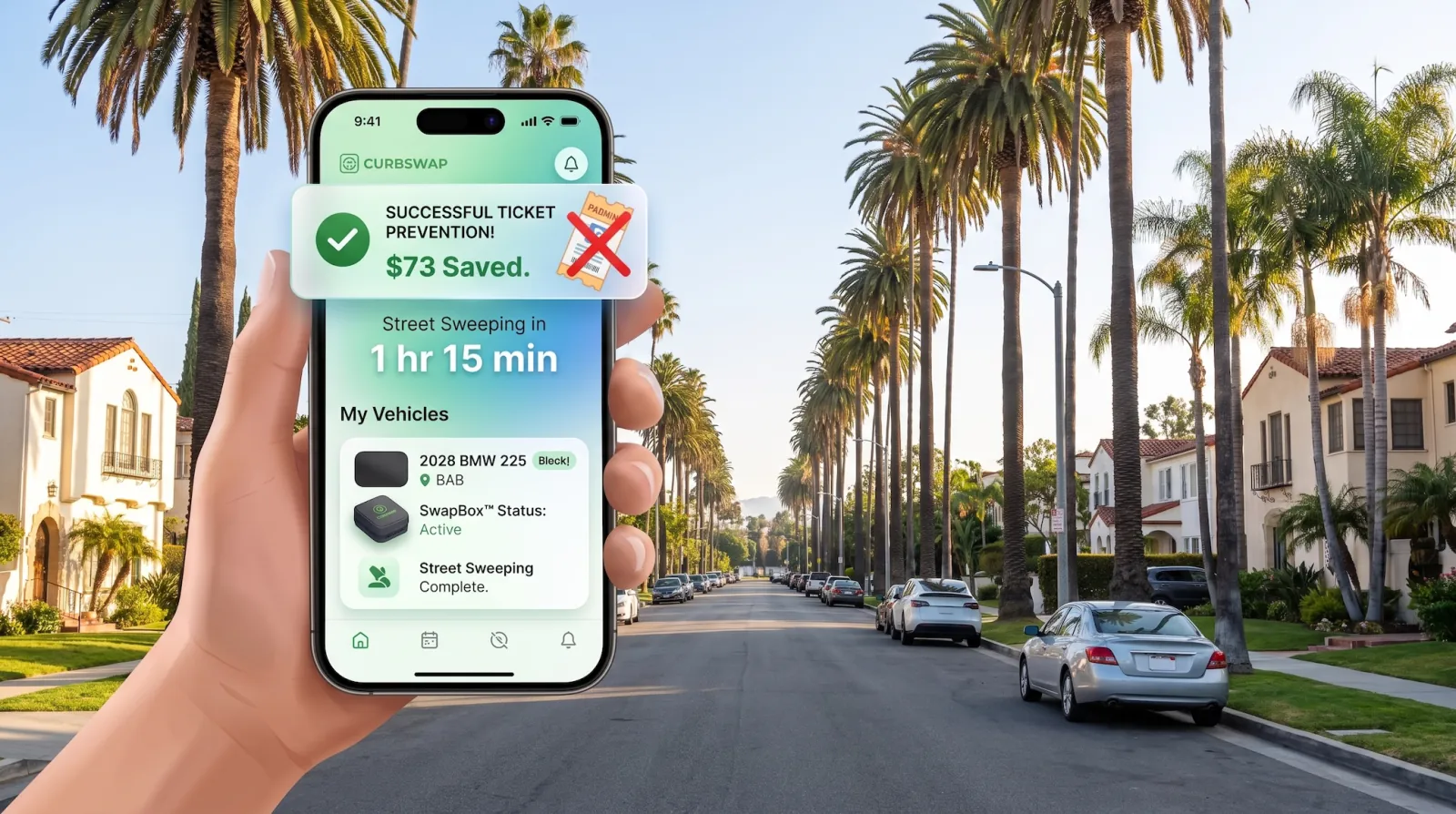
How to Prevent Parking Tickets in Los Angeles
Ten things that actually stop LA parking tickets — reading the signs, knowing your sweep day, and never having to move the car at 6am.
Read article →
LA Street Sweeping: Times, Signs & Ticket Rules
How LA's street sweeping schedule works, how to read the signs, why it's the city's #1 source of parking tickets, and how to never get caught out again.
Read article →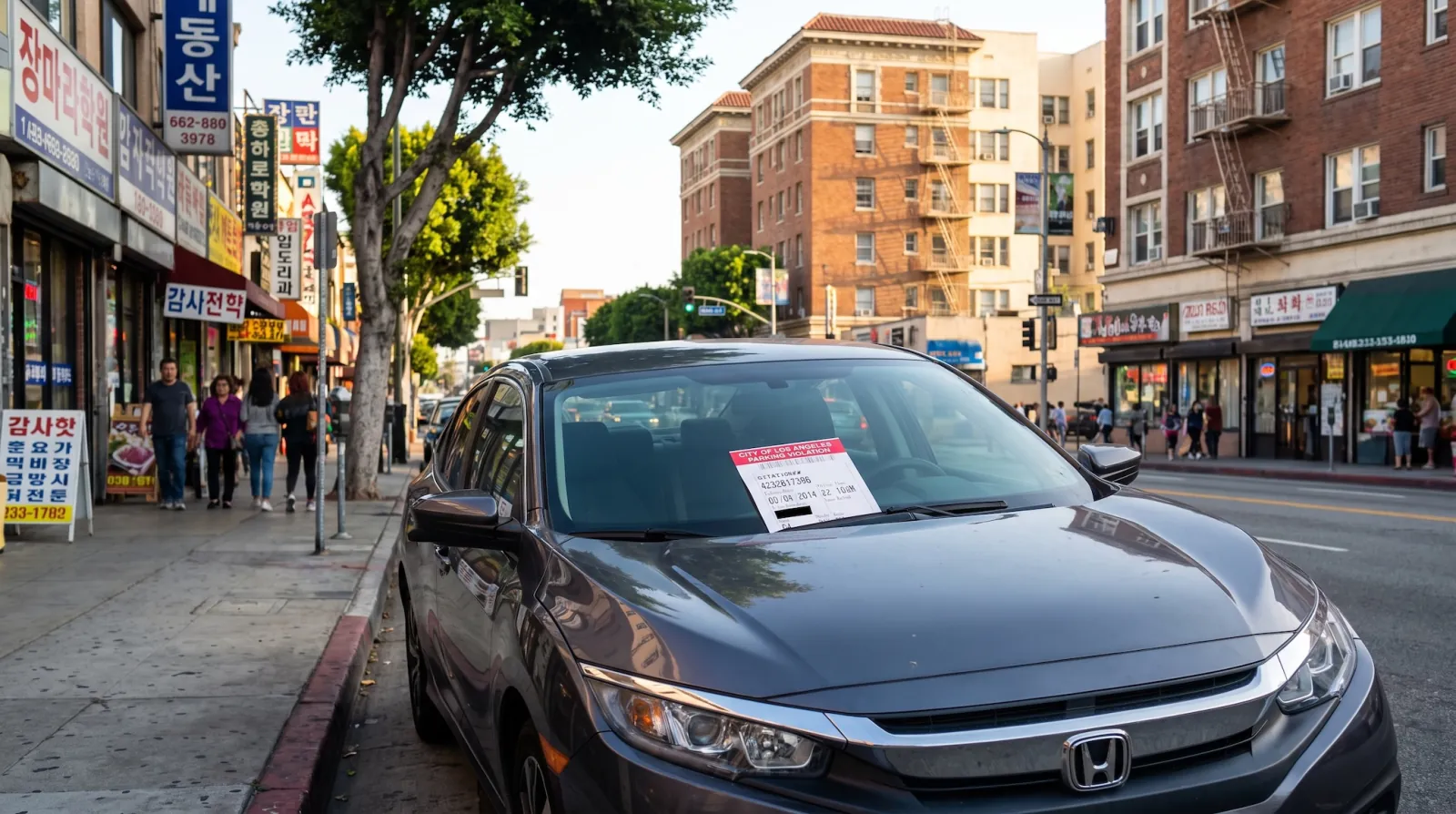
Beat the Street Sweeper Without the 6am Sprint
Running outside half-dressed to move your car shouldn't be a normal part of city life. Here's how Curbswap turns street-sweeping panic into smarter city living.
Read article →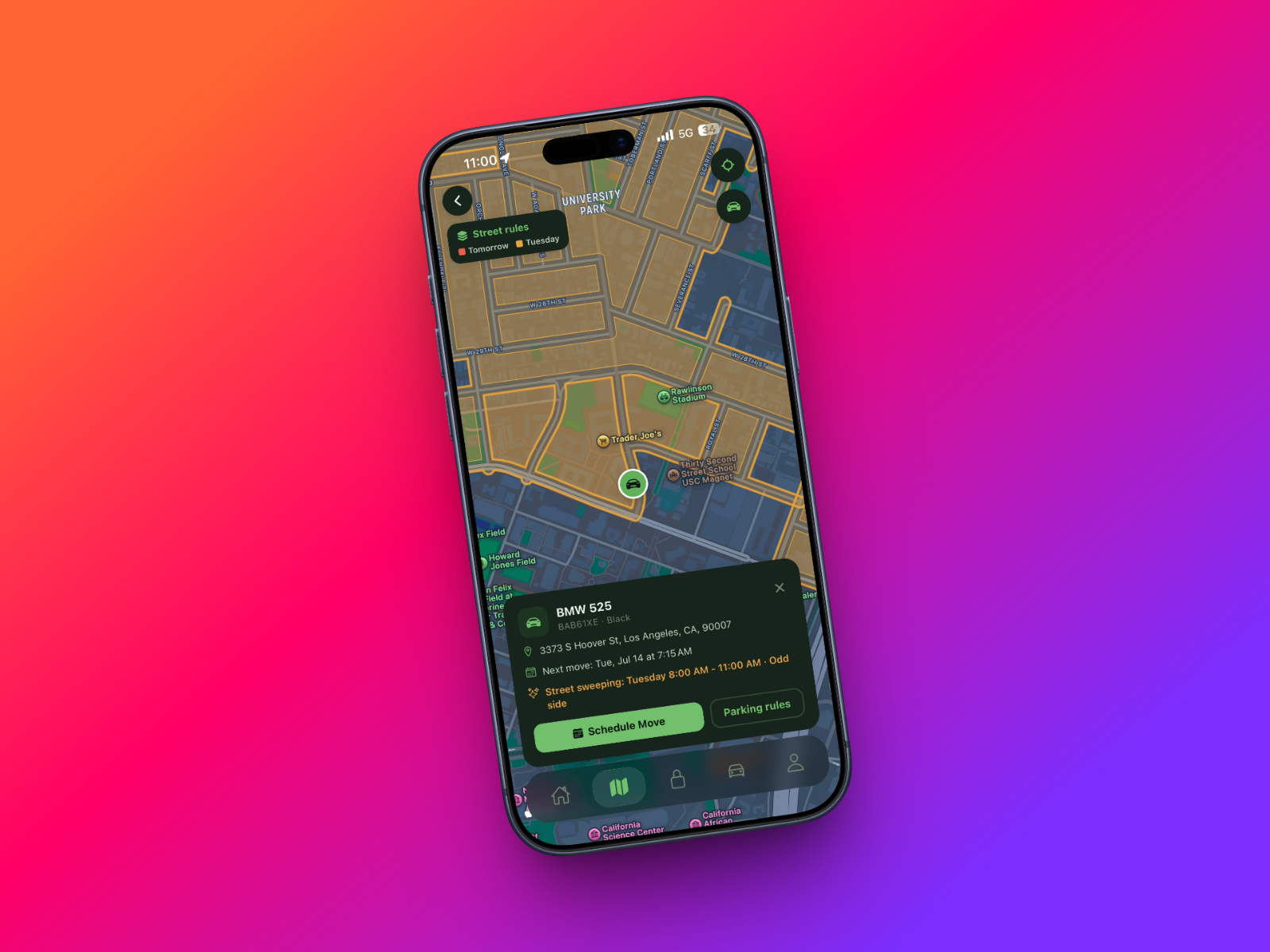
When Is Street Sweeping on My Street? (LA)
The fastest way to find your exact street sweeping day and time in Los Angeles — Curbswap's free address lookup, how to read the sign, and how to never think about it again.
Read article →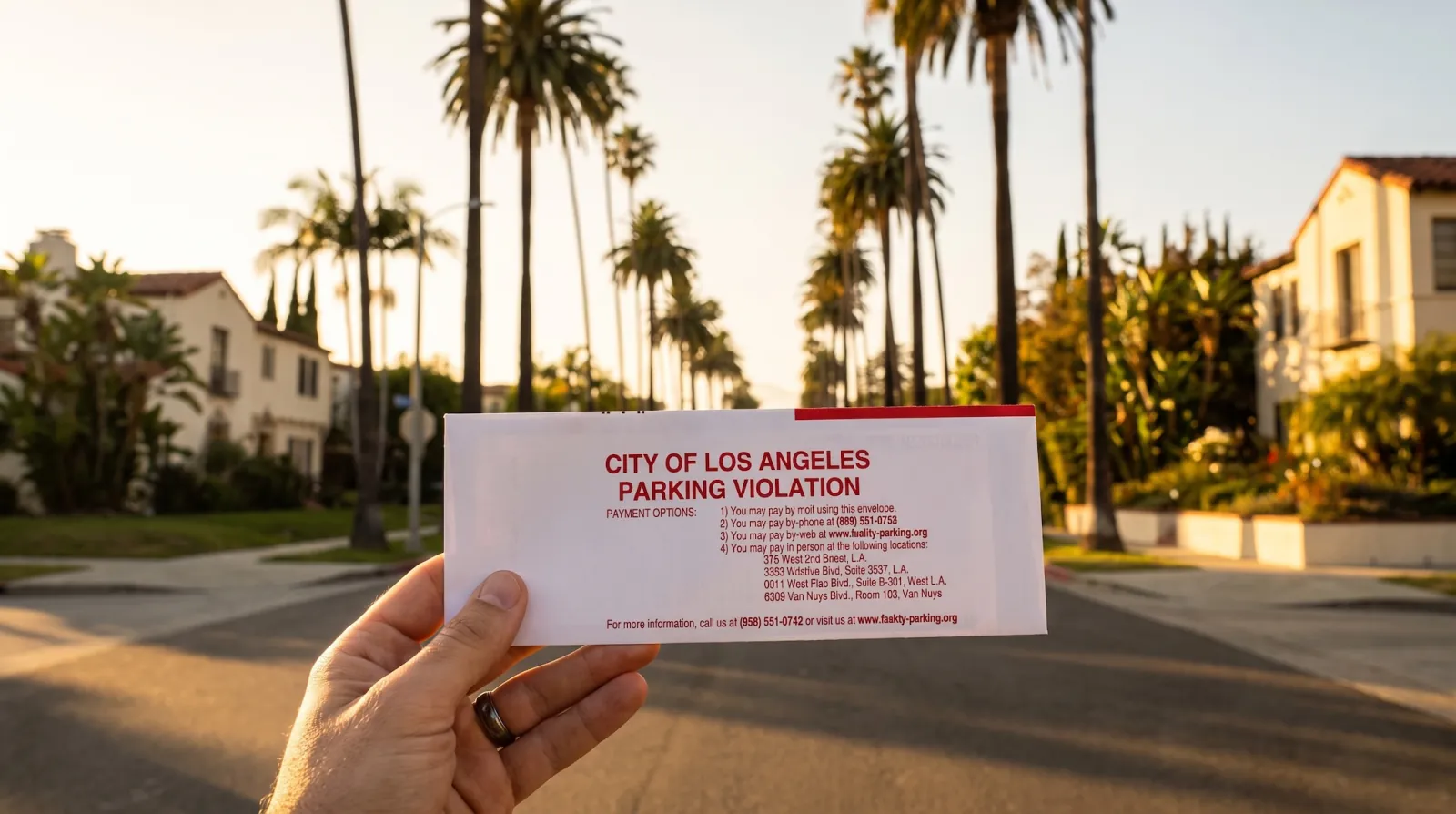
LA Street Sweeping Ticket: Cost and How to Fight
A street sweeping ticket in LA stings. Here's exactly what it costs, how to contest one that's wrong, and the simplest way to stop getting them for good.
Read article →
What Happens If You Don’t Move Your Car for Sweeping
A missed street sweeping window in Los Angeles means a $73 citation at minimum — and a possible tow. Here's exactly what happens, what it costs, and what unpaid tickets lead to.
Read article →Street sweeping & LA parking questions
The city posts a “No Parking” window on each block — usually a one- to two-hour slot on a set day — when the curb must be clear for the sweeper. Schedules change block by block, and the two sides of the same street are often swept on different days.
A street-sweeping citation in LA is about $73. It’s the city’s single most common ticket — Los Angeles issues an estimated 1.5–2 million parking citations a year, and street sweeping is the #1 cause.
Yes. The citation is tied to the posted “No Parking” window, not the sweeper’s actual arrival. If you’re parked during that window you can be ticketed regardless.
Legally, no — the ticket is tied to the posted window, not the sweeper. Enforcement can still cite you until the window ends, even if the sweeper has already gone by. The safest bet is to wait until the posted window is over.
Yes. Los Angeles suspends street-sweeping enforcement on a set list of holidays each year. On those days you won’t be ticketed for sweeping, but all other posted restrictions still apply.
Many LA streets sweep each side on a different day. Curbswap asks a one-tap “which day does your side sweep?” so your alerts and Curbswaps protect you on the correct day for your side of the street.
Red = no stopping or parking; yellow = commercial loading only during posted hours; white = passenger loading/drop-off; green = short-term parking with a posted time limit; blue = disabled parking with a valid placard. Colored zones apply on top of street sweeping.
No. A preferential (permit) parking permit exempts you from many time limits in your district, but not from street sweeping — you still have to clear the curb during the posted sweep window.
A residential zone where non-permit vehicles face tight time limits during posted hours. A residential permit exempts you from many of those limits — but not from street sweeping.
Short-notice restrictions posted for film shoots, construction, or utility work — often just 24–72 hours ahead. A legal spot can become a tow-away zone overnight, which is why they catch so many drivers.
A ticket is a fine you pay; a tow means your car is removed to an impound lot and you pay tow, storage, and release fees on top of the citation. Street sweeping usually means a ticket, but tow-away zones and blocked-curb situations can escalate to a tow.
As of the January 2026 rate increase, expect roughly $450–$600 or more: about a $220 tow fee (first hour), around $68 per day storage (plus a 10% city parking tax), a $115 vehicle release fee, and the original citation.
The base fine for most violations without a specific provision is $63. Street sweeping runs about $73, and red-zone or no-stopping violations are at the higher end (around $93 and up).
Los Angeles has some of the strictest, most complex parking enforcement in the country — 7,000+ blocks with unique restrictions and 35,000+ signs — so it’s where hands-off protection helps the most.
Beyond the City of Los Angeles, the free lookup also covers LA County unincorporated areas, Santa Monica, and Redondo Beach. Other separately-incorporated cities (Beverly Hills, West Hollywood, Culver City, and similar) aren’t in the dataset yet. This is about the free rules lookup — the paid moving service is still Los Angeles only.
Curbswap is focused on recurring, scheduled restrictions like street sweeping. For rush-hour tow-away corridors, the safest move is not to park there during posted hours — our blog covers how to spot them.
We can’t promise the impossible, but we’re built to eliminate the most predictable and common ticket — street sweeping. If we ever fall short on a Curbswap we handled, contact support and we’ll make it right.